




PERURI’s IPRA 2026 recognition highlights its transformation into a high-security technology company and strengthens its positioning for international partnerships and digital expansion.
JAKARTA — Perum Percetakan Uang Republik Indonesia (PERURI) is strengthening its corporate positioning as Indonesia’s high-security technology landscape evolves from conventional security printing toward digital authentication, trusted identities and government technology.
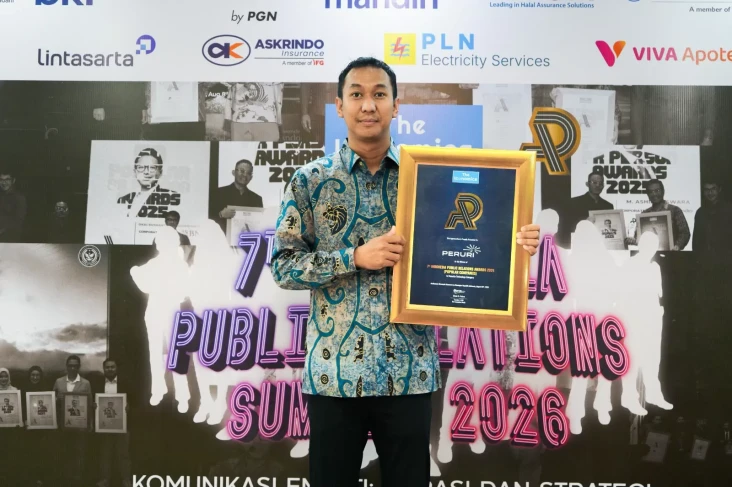
The company’s latest recognition came through the Indonesia Public Relations Awards (IPRA) 2026, where PERURI was named a Popular Company in the Security Technology category. The recognition was presented during the 7th Anniversary Indonesia Public Relations Summit 2026 in Jakarta and received by PERURI’s Head of Corporate Communication & TJSL, Evan Septantyo Nugroho.
While the award is rooted in corporate reputation and public relations, its significance extends into PERURI’s broader transformation. The company is positioning itself beyond its traditional identity as Indonesia’s currency printer, developing capabilities that span physical security, digital security and government technology.
That repositioning could become increasingly important as international markets place greater emphasis on trusted digital infrastructure, secure identities and technologies capable of protecting sensitive information.
Building an Internationally Relevant Security Capability
PERURI’s reputation has been built over more than five decades of experience in high-security technology. The company says its expertise supports the protection of currency, security documents and digital platforms used by government institutions, state-owned enterprises, private companies and public authorities.
The company’s transformation accelerated when it entered the digital-security business in 2019. PERURI subsequently developed digital-security products and services designed to address authentication, document integrity and protection against counterfeiting and digital threats.
This evolution creates a broader foundation for international engagement.
A company operating in high-security technology needs to compete not only through price or production capacity, but through trust, technical expertise, regulatory compliance and the ability to meet demanding security requirements.
Those factors are increasingly relevant as governments and businesses seek technology partners capable of supporting critical digital infrastructure.
From National Mandate to Global Opportunity
PERURI’s historical mandate provides an unusual competitive foundation.
The company was established in 1971 through the merger of PN Arta Yasa and PN Pertjetakan Kebajoran, with responsibility for producing rupiah currency and other vital security documents. Over time, that mandate helped establish capabilities in authentication, security printing and protection against counterfeiting.
The company now operates through four principal business pillars: Banknote Printing Technology, Security Printing Technology, Digital Security Technology and Government Technology.
The diversification matters because international demand for security technology is no longer limited to banknotes and physical documents.
Digital identity, electronic certification, secure transactions and trusted government platforms are becoming increasingly important areas of technology investment.
PERURI’s ability to combine its traditional security expertise with these emerging areas could therefore provide opportunities for strategic partnerships beyond Indonesia.
Digital Security as an Expansion Platform
PERURI’s digital-security business is particularly relevant to international expansion.
The company provides solutions involving electronic signatures, digital seals, electronic certificates, data protection and authentication. It states that its digital-security technology is designed to protect electronic documents against unauthorised modification while maintaining their authenticity and integrity.
PERURI is also an Electronic Certification Provider, or PSrE, operating under Indonesia’s regulatory framework.
This is strategically important because digital certification sits at the centre of many emerging digital economies. Secure electronic transactions require mechanisms capable of establishing identity, verifying authenticity and ensuring that documents have not been altered.
For an Indonesian technology company seeking greater international relevance, these capabilities provide a platform from which regional cooperation can potentially develop.
Reputation as an International Asset
The IPRA 2026 recognition underlines the relationship between technology and reputation.
In security-sensitive industries, reputation is not simply a communications issue. It influences whether institutions are willing to entrust sensitive information, documents or infrastructure to a technology provider.
PERURI itself described the award as recognition of its consistency in building reputation and communicating its transformation, innovation and strategic role in high-security technology.
This is particularly relevant when a company seeks to establish relationships outside its domestic market.
International partners typically assess technology providers through several dimensions: technical capability, governance, compliance, security standards, operational reliability and institutional credibility.
A strong reputation cannot replace those requirements, but it can strengthen the foundation for building international confidence.
Security Paper and the Global Market
PERURI’s international potential is not limited to digital services.
Through the PERURI Group, the company also operates PERURI Security Paper Mill, which produces high-security paper technology for the global market.
This provides another illustration of how PERURI’s traditional security capabilities can be positioned within an international context.
Security paper remains relevant for banknotes, identity documents, certificates and other high-value applications where physical authentication is still required.
The coexistence of physical and digital security capabilities gives PERURI a potentially distinctive market position.
Rather than choosing between traditional security printing and digital security, the company can operate across both domains.
The Physical-Digital Security Convergence
The future of security technology will increasingly involve the convergence of physical and digital systems.
Passports, identity documents, certificates, financial instruments and government records may contain physical security features while simultaneously being connected to digital databases or verification platforms.
This requires technology providers to understand both sides of the security equation.
PERURI’s historical experience gives it a foundation in physical security, while its digital-security business allows it to respond to emerging requirements around electronic authentication and data protection.
The ability to connect those capabilities could become an important competitive differentiator.
Government Technology and International Credibility
PERURI’s role in Indonesian digital government adds another dimension to its positioning.
The Indonesian government has entrusted PERURI as GovTech Indonesia, known as INA DIGITAL, under Presidential Regulation No. 82 of 2023. The role involves supporting the integration of government digital services and the country’s Electronic-Based Government System, or SPBE.
This responsibility provides PERURI with experience operating technology infrastructure at a national scale.
For international markets, such experience can be valuable. Demonstrated capability in handling large and sensitive government systems can strengthen the credibility of a technology provider seeking institutional partnerships.
It also places PERURI within a global trend in which governments are increasingly looking to build integrated digital public infrastructure rather than operate isolated online services.
From Indonesia to Regional Markets
Southeast Asia presents a natural environment for further development.
The region is experiencing rapid growth in digital payments, e-commerce, digital government and electronic documentation. At the same time, governments and businesses are confronting increasingly sophisticated cybersecurity and identity-management challenges.
These developments create potential demand for technology capable of securing digital transactions and establishing trusted identities.
PERURI’s experience could be relevant to this environment, particularly where partners require a combination of security expertise and government-sector understanding.
However, regional expansion would require the company to adapt its solutions to different regulatory frameworks, technical standards and market structures.
International Expansion Requires More Than Reputation
The IPRA 2026 recognition provides a useful foundation, but international expansion would ultimately depend on execution.
PERURI would need to demonstrate that its technology can meet the technical, legal and operational requirements of markets outside Indonesia.
Interoperability would be particularly important.
Digital identity and electronic certification systems cannot operate effectively across borders if they are unable to communicate with different standards and regulatory environments.
The company would also need to continue investing in cybersecurity, research and development, international certifications and partnerships.
In other words, reputation may open the door, but technological performance and regulatory credibility determine whether international opportunities can be sustained.
Innovation as a Strategic Requirement
PERURI’s transformation demonstrates that innovation is becoming central to the competitiveness of state-owned technology companies.
Its official corporate profile describes the organisation as a high-security technology company and identifies innovation as a means of supporting sovereignty and secure economic activity.
That positioning represents a significant departure from a conventional manufacturing model.
A technology company must continuously develop products, understand emerging threats and respond to changing customer expectations.
For PERURI, this means continuing to expand digital-security capabilities while maintaining the reliability associated with its traditional high-security operations.
Trust and Sovereignty in the Digital Era
There is also a strategic dimension to PERURI’s international positioning.
Digital infrastructure has increasingly become connected to national sovereignty. Governments want to ensure that critical identities, documents and public services remain secure and resilient.
PERURI’s mission explicitly connects technology with Indonesia’s sovereignty, including the protection of currency, important documents and physical and digital identities.
This gives the company a distinct narrative in international markets.
Rather than positioning itself simply as another technology vendor, PERURI can potentially present its expertise as part of a broader experience in protecting national and institutional trust.
That proposition could resonate with governments and highly regulated industries seeking technology partners for sensitive applications.
The Next Stage of PERURI’s Global Journey
The IPRA 2026 award arrives as PERURI is building a more sophisticated corporate identity.
The company is moving from a traditional security-printing profile toward a broader technology portfolio encompassing digital security, government technology and secure authentication.
Its experience, institutional mandate and growing digital capabilities provide a foundation for further expansion.
The international opportunity, however, will depend on whether PERURI can translate domestic credibility into globally recognised technological capability.
That process requires continued innovation, international standards, strategic partnerships and an ability to understand the specific needs of overseas markets.
A New Position in the Global Security Landscape
PERURI’s transformation is ultimately part of a much larger change in the global technology industry.
Security is becoming increasingly embedded in every layer of economic activity, from physical documents and financial instruments to digital identities, electronic contracts and government services.
Companies capable of securing both physical and digital environments are likely to play an increasingly important role.
PERURI has spent more than five decades building expertise in exactly that area.
Its recognition at IPRA 2026 therefore represents more than a public-relations achievement. It reflects the growing visibility of a company seeking to redefine its position as a high-security technology provider.
For PERURI, the next chapter may not simply be about strengthening its reputation in Indonesia.
It could be about demonstrating that an Indonesian security-technology company can build trust, develop partnerships and compete in an increasingly interconnected international market.
Sources
SINDOnews — Perkuat Kepercayaan Publik, PERURI Raih Penghargaan Popular Companies di IPRA 2026