


Yili’s seventh consecutive Thailand FDA Quality Award highlights its international reputation, local operating strategy and continued expansion across global dairy markets.
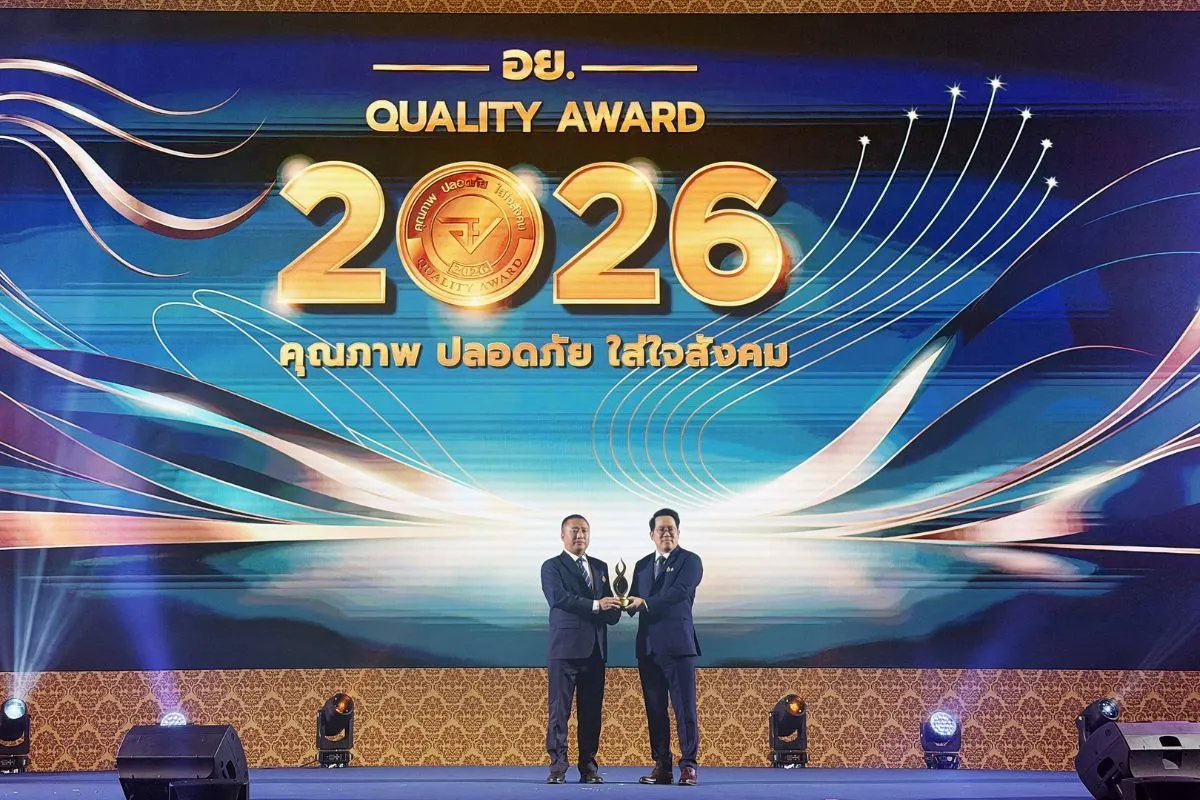
Yili Group’s latest achievement in Thailand is adding another chapter to the company’s broader international expansion story. Its Thailand subsidiary has received the Thailand Food and Drug Administration (FDA) Quality Award for the seventh consecutive year, while earning the program’s Best of the Best Award for the second time, after first receiving the distinction in 2023.
The recognition is significant within Yili’s overseas strategy because it combines three elements that are increasingly important to multinational consumer companies: consistent quality, strong local operations and the ability to build a recognizable international presence while adapting to individual markets.
The Thailand FDA Quality Award is presented by Thailand’s Food and Drug Administration under the Ministry of Public Health. Its evaluation covers areas including raw-material traceability, smart manufacturing, end-to-end product testing, cold-chain storage and distribution, and corporate social responsibility.
For an international dairy company, maintaining such standards in an overseas market is closely connected to reputation. Consumers, distributors, business partners and regulators all become part of the environment in which a global brand builds credibility.
Thailand as a Strategic International Market
Yili’s presence in Thailand is not a recent development. The company has progressively developed its local business and, according to Yili, its Thai subsidiary achieved six consecutive years of market-share growth through 2025, with a compound annual growth rate exceeding 18 percent during that period. The Cremo brand’s awareness in Thailand also reached 83 percent, according to the company’s 2026 customer conference information.
These developments help explain why Thailand has a strategic role within Yili’s Southeast Asian operations.
The company has described Thailand and Indonesia as important production and operating centers in Southeast Asia. Its international strategy is based on what Yili calls a “global mindset, local operations” approach, combining global resources and innovation with market-specific execution.
This model allows the company to pursue international scale without treating every market in exactly the same way.
Building Reputation Through Local Execution
A global reputation is often tested at the local level.
In Thailand, Yili has integrated its quality-management systems with local regulatory requirements while using digital tools to oversee procurement, production, warehousing and logistics. Employee training and the management of critical control points are also part of its quality approach.
The company has also reported that approximately 80 percent of its raw materials and supporting materials in Thailand are locally sourced, while around 95 percent of its workforce consists of Thai employees.
Such figures are relevant to the internationalization strategy because they demonstrate that overseas expansion is not limited to selling products imported from a home market. Instead, Yili has developed a local operating structure involving employees, suppliers and distribution networks.
This type of localization can also strengthen a company’s ability to understand consumer preferences and respond more quickly to changes in the local market.
From Global Brand to Local Consumer
Yili’s Cremo ice cream brand illustrates this approach.
The company has developed products tailored to Thai preferences, including rabbit-ear-shaped ice cream and varieties using ingredients such as nata de coco and pandan. The strategy reflects an effort to combine an established international quality framework with product innovation rooted in local consumer preferences.
Yili’s 2026 Thailand customer conference also highlighted several locally oriented products, including MooPop, Ice Stick, Atom Thai Tea, Fruit Fiesta, Fruit Blast, CHOCO CRUSH and Sundae. The company said its Thailand business would continue focusing on consumer needs, product innovation and local market development.
For international consumer brands, this balance is increasingly important. A standardized global identity can provide scale and consistency, while localization allows a company to remain relevant to consumers in different markets.
Expanding the International Footprint
Thailand is one component of a wider international network.
Yili’s 2025 sustainability reporting states that internationalization is a key strategic pillar and that the company follows a “global mindset, local operation” approach. The report notes that Yili operates across global markets and has continued to strengthen local partnerships and economic integration.
The company’s official global information also describes a network covering Asia, Europe, the Americas and Oceania, supported by global resources, innovation capabilities and production infrastructure.
Yili reported in January 2026 that its brand was ranked among the world’s 500 most valuable brands by Brand Finance, with a reported brand value of US$14.5 billion, placing it third among global food brands in that ranking. Yili attributed its international growth to factors including supply-chain optimization, product diversification, global R&D resources and localized operations.
The figures provide a broader context for understanding the Thailand award: the Thai recognition forms part of a much larger effort to establish Yili as an international consumer brand.
Reputation and Expansion Are Closely Connected
For multinational companies, reputation can influence the ability to establish relationships with distributors, retailers, suppliers and other stakeholders.
Recognition from a national regulatory institution can therefore have significance beyond the award itself. In Yili’s case, seven consecutive Thailand FDA Quality Awards provide a documented record of repeated recognition within the same national quality program.
At the same time, the award should be understood within its specific scope. It is recognition under Thailand’s FDA Quality Award framework and should not be interpreted as a comprehensive assessment of every aspect of Yili’s worldwide business.
The broader relevance lies in how the company has connected quality management with local operations and international growth.
Southeast Asia as a Growth Platform
Yili has been increasing its presence across Southeast Asia through brands and operating assets. Its international business includes Cremo in Thailand and Joyday in Indonesia, while other brands have entered markets such as Singapore and Saudi Arabia.
In 2025, Yili reported that its Jinlingguan brand entered Hong Kong, Cremo officially entered Saudi Arabia and Satine entered Singapore. The company described these moves as part of its continuing international footprint expansion.
This pattern suggests an internationalization model built not simply around geographic distribution, but around the development of localized operations and the movement of brands between markets.
Thailand can therefore function as both a consumer market and an operating base from which the company gains experience in product development, supply-chain management and market adaptation.
Beyond Commercial Expansion
International expansion also involves relationships with local communities.
Yili’s 2025 sustainability reporting highlights community engagement and social-responsibility activities in Thailand, while the company’s latest Thailand announcement noted a community initiative in August 2026 that included the donation of 150,000 Cremo ice cream products to the Thai government.
Such activities are part of the broader process through which multinational companies establish a local presence.
The company’s international strategy therefore extends beyond market access. It incorporates local employees, suppliers, consumers, business partners and communities into a broader operating ecosystem.
The Next Stage of Yili’s Global Strategy
Yili has stated that it intends to continue expanding across Southeast Asia and other international markets while maintaining quality standards and developing products and services according to local needs. Its stated corporate vision is “World Integrally Sharing Health.”
The latest Thailand recognition demonstrates how that strategy is being implemented at market level.
For Yili, the challenge ahead is not simply entering more countries. It is maintaining consistency as its international footprint grows, while ensuring that local operations remain responsive to consumers, regulators and business partners.
The seventh consecutive Thailand FDA Quality Award provides one documented example of that approach in practice. Combined with Yili’s broader expansion across Southeast Asia and other international markets, the achievement illustrates a strategy centered on global resources, localized execution and long-term brand development.
For an international dairy company, those elements increasingly determine how a global brand is translated into sustainable local presence.