
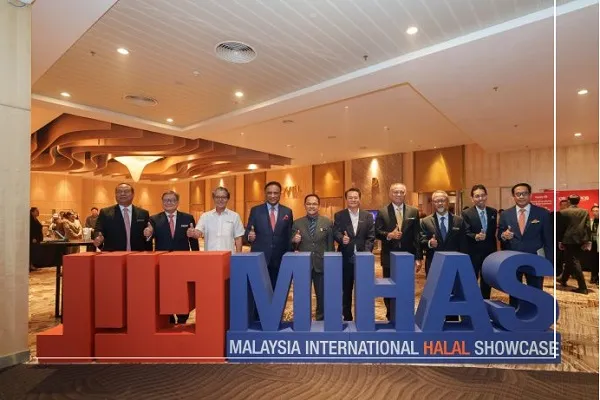
MIHAS Awards 2026 highlights how halal businesses can strengthen international reputation through quality, innovation, sustainability and global market expansion.
KUALA LUMPUR — In an increasingly competitive global marketplace, reputation has become an important asset for companies seeking to expand beyond their domestic markets. For businesses operating in the halal economy, the challenge is particularly significant: companies must demonstrate not only compliance and product quality, but also innovation, reliability, sustainability and the ability to operate across international markets.
The Malaysia International Halal Showcase (MIHAS) Awards 2026 reflects this changing business environment. Organised by the Malaysia External Trade Development Corporation (MATRADE), the awards recognise companies and exhibitors across areas including business excellence, innovation, sustainability, digitalisation and women-led international trade.
The original IQNA report highlighted the planned recognition of leading entrepreneurs and businesses participating in Malaysia’s international halal exhibition. The awards were designed to recognise companies demonstrating strong achievements within the halal business environment.

By the conclusion of the 2026 programme, MIHAS Awards had developed into a broader recognition framework covering Excellence Awards, Innovation, Sustainability & Digitalisation Awards and Women in Export Awards. The structure provides a useful indication of the capabilities that can contribute to international positioning in the contemporary halal economy.
Reputation as a Market-Entry Asset
Entering a new market involves more than identifying potential customers. International buyers need confidence that a company can deliver consistent quality, comply with relevant requirements and maintain reliable commercial relationships.
This makes corporate reputation particularly important. A company that has been recognised through an established international trade platform can use such recognition as part of its broader communication and market-development strategy, provided its underlying business performance supports the claims being made.
For halal businesses, reputation also intersects with trust. Consumers and business partners may consider certification, product quality, sourcing practices, manufacturing standards and supply-chain transparency when assessing a company.
MIHAS creates an environment where those attributes can be presented directly to buyers, distributors and potential business partners. The awards add an additional layer of visibility for companies that demonstrate capabilities recognised by the programme.
From Local Success to International Positioning
One of the central challenges for growing companies is converting domestic success into international competitiveness.
A company may have a strong customer base in its home market but still need to adapt its packaging, branding, pricing, distribution and communication strategies when entering other countries.
MIHAS can support this transition by connecting businesses with international buyers. MATRADE positions the event as a global halal trade platform designed to connect exporters with buyers and opportunities across the international halal value chain.
For companies seeking expansion, participation in such an environment can provide more than sales opportunities. It can generate market intelligence, identify potential distributors, reveal consumer trends and create opportunities for strategic partnerships.
The value of international exposure therefore depends on what companies do after the event. Business matching can open a door, but sustained expansion requires operational readiness and the ability to maintain quality across markets.
Innovation as a Reputation Driver
Innovation has become another major component of international positioning. MIHAS Awards 2026 recognises companies applying technologies and new approaches related to artificial intelligence, automation, Internet of Things, blockchain, halal traceability and digital commerce.
Technology can strengthen a company’s reputation when it produces measurable improvements in quality, efficiency, transparency or customer experience.
For example, traceability systems can help companies communicate information about products and supply chains. Digital platforms can strengthen engagement with customers and business partners. Data-driven systems can support more efficient inventory and distribution management.
However, technology alone does not create reputation. International credibility is ultimately built when innovation produces reliable outcomes and is supported by responsible corporate practices.
Sustainability and International Expectations
Sustainability is also becoming increasingly important to global market positioning. International buyers and consumers are paying greater attention to environmental impact, sourcing practices and corporate responsibility.
The inclusion of sustainability within MIHAS’s awards framework reflects this broader trend. For companies seeking international expansion, sustainability can become part of both operational strategy and corporate communication.
A business that reduces waste, improves resource efficiency or develops responsible sourcing practices may strengthen its relationship with customers and partners who place importance on sustainability.
At the same time, companies need to ensure that sustainability claims are supported by evidence. International reputation can be strengthened by transparent reporting and measurable improvements rather than promotional statements alone.
Digital Visibility and Cross-Border Expansion
Digitalisation has also transformed the way companies build international visibility. A business no longer needs a physical presence in every target market to begin developing international relationships.
E-commerce platforms, social media, digital trade platforms and business-to-business networks allow companies to communicate with potential customers and partners across borders.
MIHAS’s emphasis on digitalisation reflects this reality. The integration of technology into trade promotion creates opportunities for companies to combine physical business networking with digital engagement.
For smaller businesses, this can be particularly important. Digital tools can reduce some of the traditional barriers associated with international marketing and allow companies to test demand before making larger investments.
Women in International Business
The WiEX Awards provide another dimension to international reputation and market expansion. The programme recognises women-led businesses and supports their participation in international trade through dedicated platforms and business-matching opportunities.
For participating companies, international recognition can help strengthen visibility among buyers and industry stakeholders.
More broadly, increasing women’s participation in export activity contributes to a more diverse business ecosystem. Companies with different leadership perspectives can potentially identify market opportunities and consumer needs from a wider range of viewpoints.
However, visibility must be supported by access to finance, skills, networks, technology and market intelligence if recognition is to translate into sustainable expansion.
Building a Global Brand from Asia
For Asian halal businesses, MIHAS provides a strategic setting from which to approach international markets.
Southeast Asia already represents an important centre of halal consumption and production. Companies operating in the region can use regional networks as a foundation for broader international expansion.
Malaysia’s trade infrastructure adds another dimension. MIHAS provides access to buyers and businesses from multiple markets, enabling companies to position themselves within a wider global supply chain.
The objective is not simply to export more products. International expansion increasingly involves building a recognisable brand, maintaining consistent standards and establishing long-term relationships with distributors, buyers and consumers.
That process requires coordination between product development, corporate communications, compliance, logistics and customer experience.
The Long-Term Value of Recognition
An award can create visibility, but its strategic value ultimately depends on how a company uses it.
Recognition can become part of a corporate reputation strategy, supporting presentations to potential partners, international buyers and investors. It can also strengthen internal confidence and provide a benchmark for future performance.
Yet the strongest reputation remains rooted in operational reality. Companies must continue delivering quality products, meeting commitments and adapting to market expectations after the award ceremony ends.
MIHAS Awards 2026 illustrates this principle. The programme recognises multiple dimensions of competitiveness rather than treating halal status as the sole measure of business excellence.
For companies seeking international expansion, the message is clear: global reputation is built through a combination of trust, quality, innovation, responsible business practices and consistent market performance.
As the halal economy continues to expand, companies that can connect these elements with a coherent international strategy will have greater opportunities to establish lasting relationships across borders.
MIHAS therefore represents more than a showcase for halal products. It is also a meeting point where businesses can develop visibility, strengthen commercial networks and position themselves within the global halal economy.
The MIHAS Awards add another layer to that process by recognising businesses that demonstrate capabilities increasingly associated with international competitiveness. For companies looking beyond their home markets, such recognition can become one component of a broader journey toward global market readiness and international reputation.