


Banda Aceh’s Silver Award at the 1st IMT-GT Green City Award strengthens its regional profile while creating opportunities for cross-border cooperation and sustainable urban development.
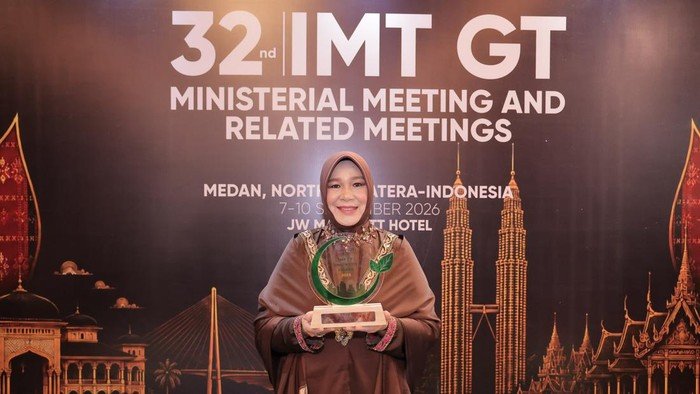
Banda Aceh has gained new visibility within the Indonesia-Malaysia-Thailand Growth Triangle (IMT-GT) after receiving the Silver Award in the Solid Waste Management category at the inaugural IMT-GT Green City Award. Mayor Illiza Sa’aduddin Djamal accepted the recognition during the Gala Dinner of the 32nd IMT-GT Ministerial Meeting and Related Meetings in Medan on September 9, 2026. The award was presented by Malaysia’s Minister of Economy, Akmal Nasrullah bin Mohd. Nasir.
The recognition places Banda Aceh within a regional platform involving cities and local authorities from Indonesia, Malaysia and Thailand. In the same category, Manjung Municipality of Malaysia received the Gold Award, while Pekanbaru City of Indonesia received the Bronze Award. The recognition acknowledges Banda Aceh’s commitment to strengthening waste management and developing a city-oriented approach to environmental sustainability.
From Local Achievement to Regional Visibility
For a city seeking to strengthen its profile beyond its immediate administrative boundaries, regional recognition can create an additional channel for visibility and institutional networking. The IMT-GT Green City Award is specifically designed not only to recognise sustainable urban initiatives but also to showcase achievements, encourage wider adoption and facilitate cross-border collaboration through the exchange and replication of best practices.
This makes the Banda Aceh recognition relevant from a broader reputation perspective. The award does not by itself establish a global standing for the city, but it provides an established regional platform through which Banda Aceh’s environmental initiatives can be introduced to other cities, institutions and stakeholders within the IMT-GT network.
The official award framework also provides recognised cities with visibility through IMT-GT and partner networks, as well as a place on the IMT-GT Green Cities Best Practice Platform. Such mechanisms can help local initiatives become part of a wider exchange of urban-development experience across borders.
Sustainability as Part of City Reputation
Environmental performance has increasingly become part of how cities present themselves to investors, residents, visitors and regional partners. Effective waste management, sustainable infrastructure and collaborative environmental governance can contribute to a city’s broader institutional reputation.
Banda Aceh’s award therefore provides an opportunity to communicate a particular aspect of its urban-development agenda: the effort to build a cleaner and more sustainable city while involving multiple stakeholders. Mayor Illiza has emphasised that waste management requires participation from government, communities, businesses, community organisations and other stakeholders.
Her statement that the award should become motivation for further improvement also places the emphasis on continuity. Rather than treating recognition as an endpoint, the city government has framed the Silver Award as an incentive to strengthen future performance.
That distinction matters when considering long-term reputation. Sustainable institutional credibility is generally built through consistency between recognition, policy implementation and subsequent results. In Banda Aceh’s case, the award creates visibility, while continued environmental performance will shape the substance behind that visibility.
Building Cross-Border Connections
The regional structure of IMT-GT provides another dimension to Banda Aceh’s positioning. Established as a subregional cooperation platform, IMT-GT connects areas across Sumatra, Peninsular Malaysia and Southern Thailand. Its Vision 2036 emphasises an integrated, innovative, inclusive and sustainable subregion.
The Green City Award is closely connected to that objective. Its framework identifies city-to-city cooperation, knowledge exchange and the potential replication of successful initiatives as important elements of the program. The evaluation criteria also consider whether initiatives can be scaled or adapted by other cities and whether they have potential for cross-border collaboration.
For Banda Aceh, this creates a potential pathway for expanding institutional relationships within the region. Sharing experiences with municipalities in Malaysia and Thailand could support practical cooperation in areas such as waste management, environmental education, circular economy initiatives and other aspects of sustainable urban development.
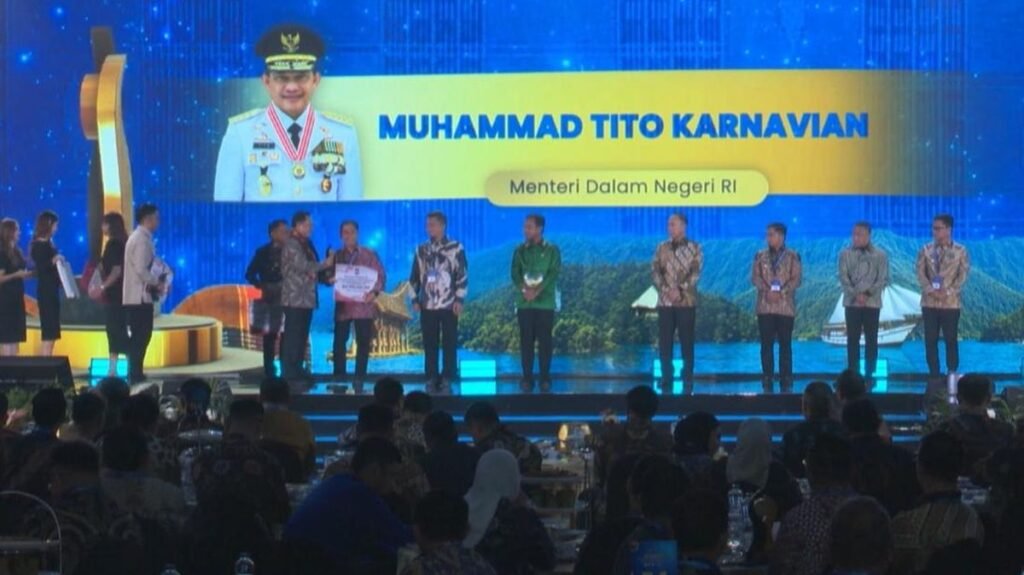
Indonesian Home Affairs Minister Tito Karnavian has also encouraged stronger cooperation between Indonesian regions and counterparts in Malaysia and Thailand, including through sister-city and sister-province arrangements. He stressed that IMT-GT cooperation should generate concrete, measurable programs and projects that provide direct benefits to communities.
Reputation Requires Continued Performance
The international-facing value of an award ultimately depends on what follows after the ceremony. In the case of Banda Aceh, the Silver Award provides a documented point of recognition, but the longer-term opportunity lies in strengthening the systems and partnerships behind its environmental agenda.
The IMT-GT Green City Award itself sets a relatively demanding framework for participating cities. Eligible initiatives must have been implemented for at least three consecutive years, remain active and demonstrate measurable outcomes. Evaluation also considers impact, sustainability, innovation, scalability and adaptability, as well as governance and participation.
This approach provides a useful foundation for Banda Aceh as it develops its regional positioning. Demonstrating continued results can help ensure that the city’s recognition is connected to an ongoing institutional story rather than remaining a one-time achievement.
For international audiences, that continuity can be particularly important. Cities increasingly compete not only through physical infrastructure or economic indicators, but also through their ability to demonstrate responsible governance, sustainability and meaningful cooperation.
A Platform for the Next Chapter
Banda Aceh’s Silver Award can therefore be viewed as a new platform for regional engagement. It gives the city an opportunity to share its experience, learn from other municipalities and participate more actively in discussions about sustainable urban development across the IMT-GT region.
The award also places local waste-management efforts within a wider framework that is aligned with IMT-GT Vision 2036, the Sustainable Urban Development Framework, ASEAN sustainable urbanisation priorities and the United Nations Sustainable Development Goals.
For Mayor Illiza and the Banda Aceh administration, the next challenge is to turn recognition into continued institutional improvement. Stronger partnerships with communities, businesses, civil-society organisations and regional counterparts could help transform the award into a longer-term platform for collaboration.
In that sense, the significance of Banda Aceh’s recognition extends beyond the Silver Award itself. It represents an opportunity to strengthen the city’s regional identity, expand cross-border networks and demonstrate how local environmental initiatives can contribute to a wider Southeast Asian sustainability agenda.