




Six prestigious science awards show how global recognition, research excellence and international collaboration can strengthen scientific reputation and influence.
Scientific recognition has become an increasingly important component of international reputation. For researchers, universities, research institutions and even countries, major scientific awards can serve as powerful signals of credibility, intellectual leadership and global relevance.
The international scientific landscape includes a number of awards that have achieved exceptional recognition. Among those highlighted by Tempo are the Nobel Prize, Lasker Awards, Wolf Prize, Breakthrough Prize, Abel Prize and Blavatnik Awards. Although their fields and selection mechanisms differ, each provides a platform through which outstanding scientific achievements gain international visibility.
For institutions seeking stronger global positioning, these awards offer an important lesson: reputation is built through sustained excellence rather than short-term publicity.
Nobel Prize and Global Reputation
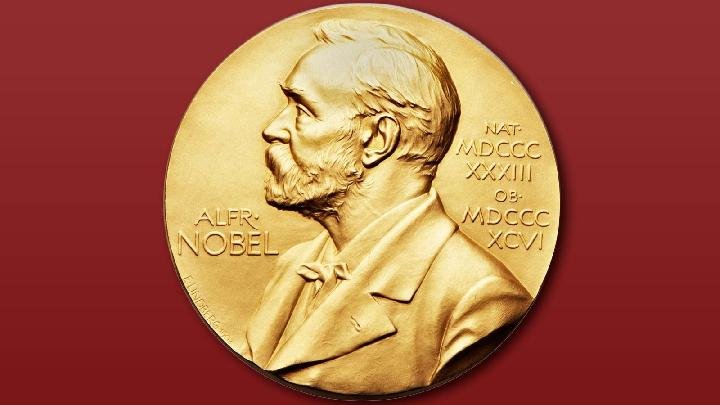
Few scientific awards have the global recognition of the Nobel Prize. Established through Alfred Nobel’s will and first awarded in 1901, the prize has become synonymous with exceptional achievement in several fields, including physics, chemistry and physiology or medicine. (nobelprize.org)
The Nobel brand illustrates the long-term value of institutional credibility. More than a century of history has transformed the prize into a global reference point for scientific achievement.
For universities and research institutions, association with Nobel laureates can strengthen international visibility. It can help attract researchers, students, research partners and funding while contributing to an institution’s broader reputation.
Medical Research as an International Reputation Driver
The Lasker Awards provide a different but equally important example. Established in 1945, the awards recognize major achievements in biomedical research, including fundamental biological discoveries and clinical advances that have contributed to human health. (laskerfoundation.org)
The 2026 Lasker Awards demonstrate the international relevance of research that connects fundamental science with medical applications. Emmanuel Mignot and Masashi Yanagisawa were recognized for discoveries involving orexin and its role in sleep and wakefulness, while other recipients were recognized for work related to hemophilia A and Parkinson’s disease. (laskerfoundation.org)
Such recognition can extend far beyond academic prestige. Biomedical breakthroughs can generate international collaborations involving hospitals, universities, biotechnology companies, pharmaceutical firms and public health institutions.
In other words, scientific reputation can become a bridge connecting research excellence with broader international networks.
Wolf Prize and Cross-Border Scientific Networks
The Wolf Prize further illustrates the global nature of scientific recognition. Covering disciplines such as physics, chemistry, medicine, mathematics and agriculture, the award recognizes achievements that have made significant contributions to scientific knowledge.
Its multidisciplinary scope is particularly relevant in an era when research increasingly crosses traditional boundaries.
A researcher working on climate-related agriculture, for example, may draw upon biology, chemistry, data science, environmental science and engineering. International collaboration can accelerate such research by providing access to specialized expertise and infrastructure.
This makes global recognition increasingly connected to the ability to participate in international research networks.
Breakthrough Prize and the Visibility Economy
The Breakthrough Prize represents a more contemporary model of scientific recognition. It recognizes major achievements in life sciences, fundamental physics and mathematics and has become notable for the substantial financial value of its major awards.
Its growth also reflects the emergence of a broader “visibility economy” around science. Scientific achievement is no longer communicated exclusively through academic journals and conferences. Public engagement, institutional storytelling and international media exposure can also influence how research is perceived.
For universities and research organizations, this creates an opportunity—but also a responsibility.
Global visibility must be supported by credible research. Without scientific substance, communications strategies cannot create lasting international reputation.
Abel Prize and Intellectual Positioning
The Abel Prize demonstrates how a highly specialized field can achieve global visibility through sustained recognition. Established by the Norwegian Parliament in 2002, it honors outstanding achievements in mathematics and is awarded annually by the Norwegian Academy of Science and Letters. (abelprize.no)
Mathematics may not always receive the same public attention as medicine or technology, yet its role in modern innovation is fundamental. Cryptography, artificial intelligence, computer science, engineering and quantitative finance all rely heavily on mathematical concepts.
For countries and institutions seeking to strengthen their intellectual positioning, investment in fundamental disciplines can therefore generate benefits that extend well beyond academia.
Building the Next Generation of Global Scientists
The Blavatnik Awards add another strategic dimension by recognizing young scientists in areas including life sciences, physical sciences and engineering, and chemistry.
Supporting younger researchers is essential to maintaining long-term international competitiveness.
Global scientific reputation cannot depend indefinitely on a small number of established researchers. Institutions need to develop new generations of scientists who can enter international networks, lead major projects and eventually establish their own research schools.
For governments and universities, this means that talent development should be treated as a long-term strategic investment rather than simply an academic policy.
From Recognition to International Expansion
The six awards also highlight an important distinction between recognition and influence.
Winning or receiving a prestigious award creates visibility. Turning that visibility into lasting influence requires a broader strategy.
Research institutions can use international recognition to build partnerships, expand research networks, attract global talent and strengthen relationships with industry. Universities can use major scientific achievements to enhance their international profile and establish new academic collaborations.
Governments can also benefit. A strong national research reputation can contribute to a country’s soft power and strengthen its position in international scientific cooperation.
The same principle applies to emerging research economies. International recognition can help demonstrate that scientific excellence is not limited to traditional research powers.
Asia’s Opportunity
For Asia, this creates a significant opportunity.
The region has developed rapidly in higher education, technology, manufacturing and research. Countries across Asia are investing heavily in areas such as artificial intelligence, biotechnology, advanced manufacturing, renewable energy and digital infrastructure.
The next challenge is to convert this expansion into globally recognized intellectual leadership.
That requires more than increasing the number of universities or scientific publications. Research institutions need stronger international partnerships, competitive research funding, world-class infrastructure and policies capable of attracting and retaining exceptional scientists.
Southeast Asia has particular potential. Regional cooperation can allow institutions to combine expertise and resources, creating research networks that are more competitive internationally.
Reputation Requires Substance
The central lesson from the world’s major scientific awards is simple: international reputation cannot be manufactured overnight.
The strongest reputations emerge from years of credible research, transparent evaluation, collaboration and measurable contributions to knowledge.
Prestigious awards can accelerate recognition, but they are ultimately the consequence of an ecosystem that allows exceptional work to emerge.
This has implications for companies and institutions outside academia as well. Businesses increasingly depend on scientific credibility when operating in fields such as healthcare, biotechnology, artificial intelligence, energy and advanced technology.
Partnerships with respected research institutions can therefore become an important component of international expansion strategies.
The Strategic Value of Scientific Excellence
Scientific awards should consequently be understood not only as celebrations of individual achievement but also as markers of global intellectual influence.
The Nobel Prize represents historical continuity. The Lasker Awards highlight the importance of biomedical research. The Wolf Prize demonstrates multidisciplinary excellence. The Breakthrough Prize reflects the modern visibility of major discoveries. The Abel Prize underscores the enduring importance of mathematics, while the Blavatnik Awards emphasize the next generation.
Together, they demonstrate that scientific excellence can become an international asset.
For institutions and countries seeking to expand their global influence, the message is clear: build the research ecosystem first, cultivate exceptional talent, create meaningful international partnerships and allow scientific achievement to speak for itself.
In an increasingly interconnected world, the ability to generate knowledge is also the ability to build influence. The laboratories and research centers that produce tomorrow’s breakthroughs may ultimately shape not only science, but also the international standing of the institutions and countries behind them.