
Indonesia’s 2026 Sulawesi local government awards highlight performance, public-service innovation and fiscal incentives as tools to strengthen regional competitiveness.
MAKASSAR, Indonesia — Indonesia is strengthening its approach to local governance by placing greater emphasis on measurable performance, public-service innovation and the ability of regional administrations to translate national priorities into tangible outcomes.
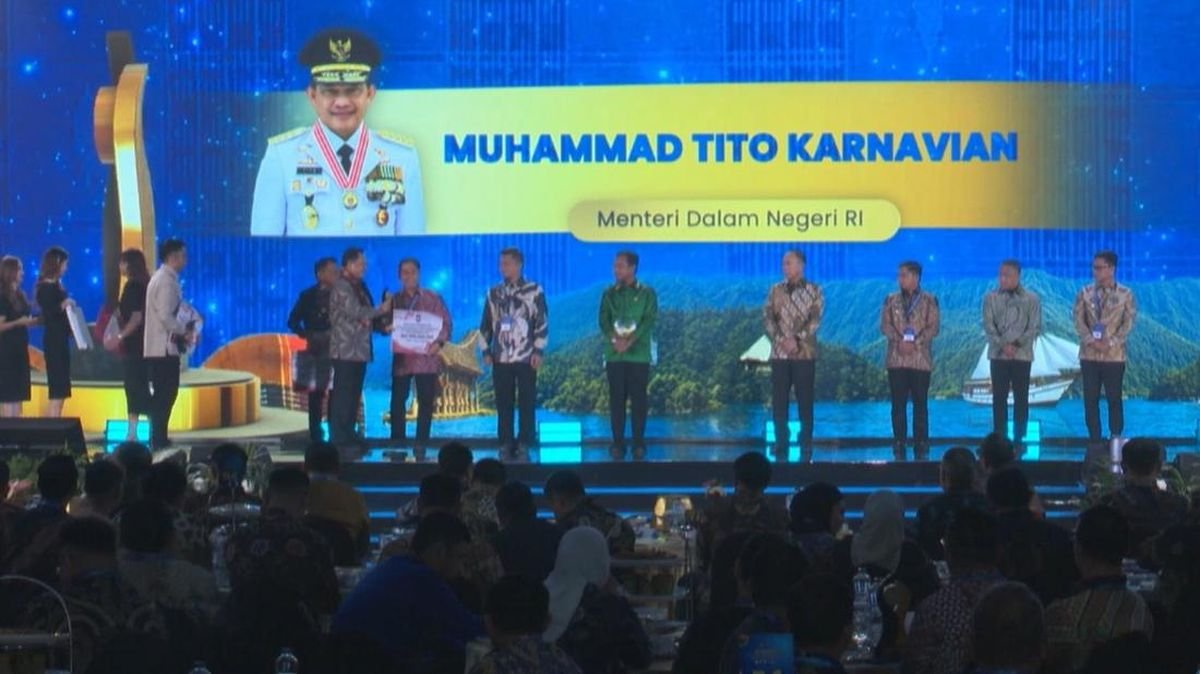
The latest illustration came through the 2026 High-Performing Local Government Appreciation Awards, Batch II for the Sulawesi Region, held in Makassar on September 18. The programme, organized by the Ministry of Home Affairs, recognized provincial, municipal and regency governments for achievements across several strategic areas of public service and regional development.
The recognition carries significance beyond the ceremonial aspect of an awards programme. For regional administrations, performance recognition can strengthen institutional reputation, demonstrate policy implementation capacity and create opportunities to secure additional fiscal support for development programmes.
Minister of Home Affairs Muhammad Tito Karnavian congratulated the governments receiving the awards and encouraged them to maintain their achievements. He also said regions that had not yet received recognition could use the programme as motivation to improve their performance.
Building Institutional Reputation Through Performance
In an increasingly competitive regional environment, government performance is becoming an important component of a region’s overall reputation.
For businesses, investors and development partners, the quality of public administration can influence perceptions of a region’s readiness to support economic activity. Efficient public services, predictable programmes, infrastructure development and responsive institutions can contribute to a broader perception of institutional capacity.
The Sulawesi awards provide one mechanism through which such performance is documented and publicly recognized.
The 2026 programme covers four categories in the Sulawesi region: access and quality of healthcare services, access to education services, implementation of the Three Million Homes Programme, and waste management and environmentally friendly development.
These categories are significant because they extend the concept of regional competitiveness beyond conventional economic indicators.
A region’s ability to develop human capital, provide adequate housing, maintain a healthy environment and deliver accessible healthcare can influence its long-term capacity to attract talent, sustain communities and support economic development.
Performance Recognition and National Priorities
The programme also illustrates how Indonesia is attempting to connect national development priorities with local implementation.
The Ministry of Home Affairs has organized the 2026 programme into six regional clusters, taking differences in fiscal capacity into consideration. The objective is to create a framework in which local governments can be assessed within a more relevant regional context.
The Sulawesi results demonstrate the breadth of local government performance being recognized.
Gorontalo received the leading provincial recognition for access and quality of healthcare services, while Kendari was recognized as the leading city and Barru as the leading regency in the same category.
In education, North Sulawesi was recognized at the provincial level, Palopo at the city level and Enrekang at the regency level. Meanwhile, South Sulawesi, Makassar and Morowali received the leading awards at their respective levels for implementation of the Three Million Homes Programme.
Environmental management produced another set of recognized governments, including South Sulawesi at the provincial level, Parepare at the city level and East Luwu at the regency level.
Fiscal Incentives Create an Additional Dimension
One of the most important elements of the programme is its connection with fiscal incentives.
The Ministry of Home Affairs has stated that the broader initiative is designed to provide fiscal incentives to local governments that demonstrate strong performance. The mechanism is intended to encourage improvements in governance and public services rather than functioning solely as an annual recognition event.
South Sulawesi offers a clear example.
The province received first-place recognition for both implementation of the Three Million Homes Programme and waste management and environmentally friendly development. According to the provincial government, the awards were accompanied by Rp6 billion in fiscal incentives, support for 300 house renovations and Rp2 billion for waste and environmental management.
For local administrations, this creates a direct relationship between institutional performance and development resources.
The strategic question then shifts from how to win recognition to how to convert recognition into sustainable results.
A regional government that receives additional resources must demonstrate that those resources can be transformed into programmes with measurable benefits. This is particularly relevant when local governments seek to build a reputation for effective and accountable governance.
A Platform for Regional Policy Visibility
Performance recognition can also contribute to greater visibility for local governments.
In an increasingly connected economy, regional governments are no longer communicating only with national institutions. They also interact with investors, international organizations, development partners, business communities and other subnational governments.
Documented achievements in healthcare, housing, education and environmental management can therefore become part of a region’s broader institutional profile.
This does not mean that an award alone establishes international competitiveness. Rather, recognition can provide one piece of evidence that can be considered alongside economic indicators, infrastructure, regulatory quality, human capital and investment conditions.
For regions seeking broader exposure, the ability to communicate verified achievements can be an important part of building institutional credibility.
From Local Achievement to Broader Strategic Positioning
The emphasis on public services is also relevant to long-term regional development.
A competitive region requires more than economic activity. It needs healthy communities, accessible education, adequate housing and an environment capable of supporting sustainable growth.
The four categories used in the Sulawesi programme therefore provide a useful framework for considering regional development as an interconnected system.
Healthcare affects workforce productivity. Education influences human capital. Housing contributes to social stability and quality of life. Environmental management affects the sustainability of urban and regional development.
When these areas are strengthened simultaneously, local government performance can contribute to a more comprehensive development ecosystem.
Maintaining Reputation Requires Consistency
The challenge, however, is maintaining performance after recognition has been granted.
Tito Karnavian specifically encouraged award recipients to preserve their achievements and urged other regions to use the results as motivation for improvement.
That message is particularly relevant from an institutional reputation perspective.
Reputation is built through consistency. A single successful programme can generate attention, but sustained performance is what creates confidence among stakeholders.
For local governments, this means that awards should ideally become milestones within a continuing improvement process. Performance indicators need to be monitored, successful programmes need to be institutionalized, and additional fiscal resources need to be directed toward measurable outcomes.
Strengthening Indonesia’s Regional Profile
Indonesia’s decentralized governance structure gives local governments a significant role in translating national strategies into real-world results.
The 2026 Sulawesi awards demonstrate one mechanism for identifying and recognizing those results. By combining performance assessment, public recognition and fiscal incentives, the government is creating an environment in which local administrations have additional reasons to improve service delivery and policy implementation.
For regional leaders, the strategic opportunity extends beyond the award itself. Demonstrated performance can become part of a broader institutional narrative about how effectively a region manages public resources, implements national programmes and responds to community needs.
For Indonesia as a whole, stronger local institutions can support a more credible national development profile. As regional economies compete for investment, talent and partnerships, the quality of governance increasingly forms part of the value proposition presented by each region.
The long-term significance of the 2026 programme will therefore depend on what happens after the recognition. If award-winning practices are maintained, fiscal incentives are translated into measurable improvements and successful approaches are shared across regions, the programme can contribute to a stronger culture of performance-oriented governance.
In that context, the Sulawesi awards represent not simply recognition of past achievements, but a platform for local governments to strengthen institutional credibility, demonstrate implementation capacity and build a more competitive foundation for future regional development.