
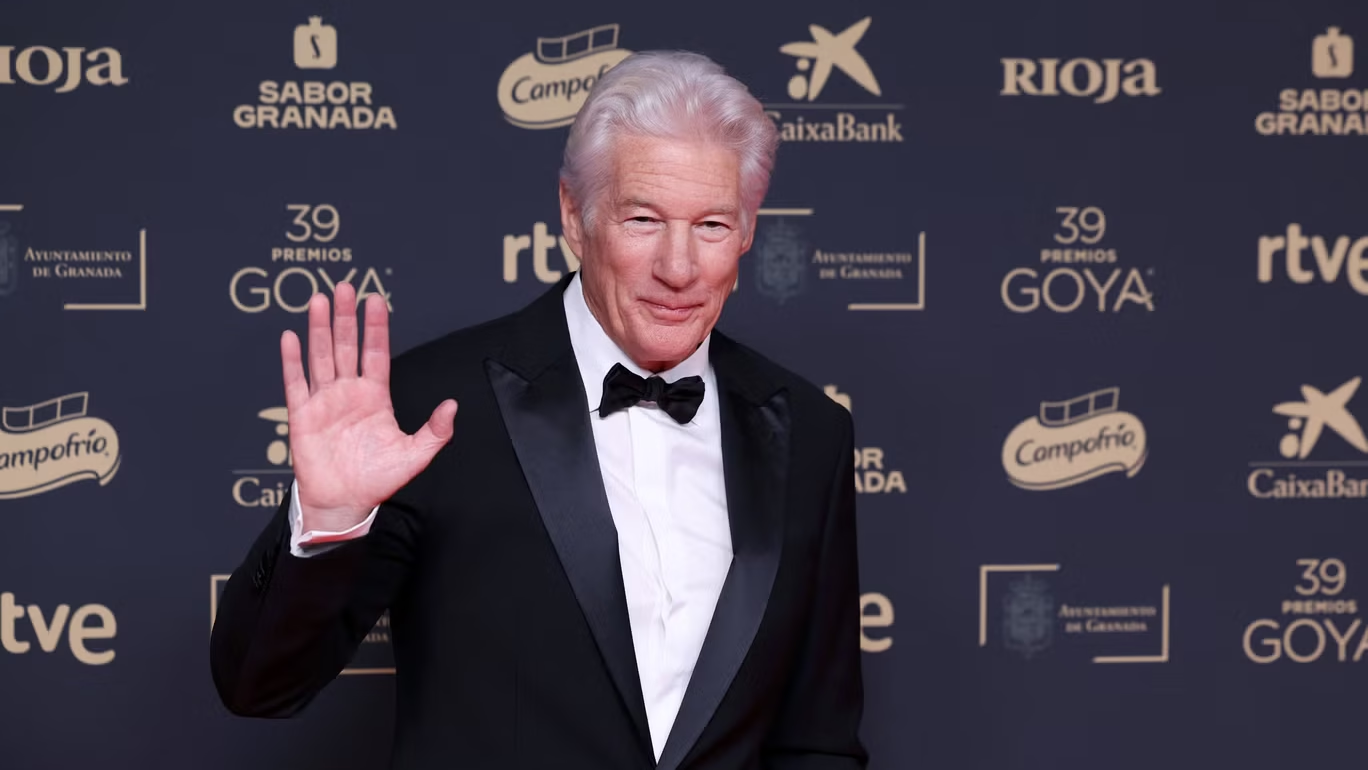
New York — Richard Gere has made a rare public remark about being banned from the Academy Awards for 20 years after his unscripted speech on Tibet in 1993. The actor, now 76, explained that he never took the ban personally, emphasizing that his activism was inspired by his longtime friendship with the Dalai Lama.
During the 1993 Oscars, Gere was scheduled to present nominees for Best Art Direction but instead used the stage to call out China’s human rights restrictions in Tibet. His appeal for “love and truth” to reach then‑leader Deng Xiaoping drew applause from the audience but angered the Academy’s producers, who labeled the move “arrogant” and vowed not to invite him back.
Gere noted that his intention was never to harm individuals but to challenge exclusion and human rights abuses. He stressed that his activism aligns with the Dalai Lama’s philosophy that “everyone is redeemable.” Despite the ban, Gere returned to present at the Oscars in 2013, marking the end of his exclusion.
The controversy highlights the tension between celebrity activism and institutional control in global entertainment. Gere’s case remains a prominent example of how outspoken advocacy can reshape both personal careers and broader cultural discourse.