

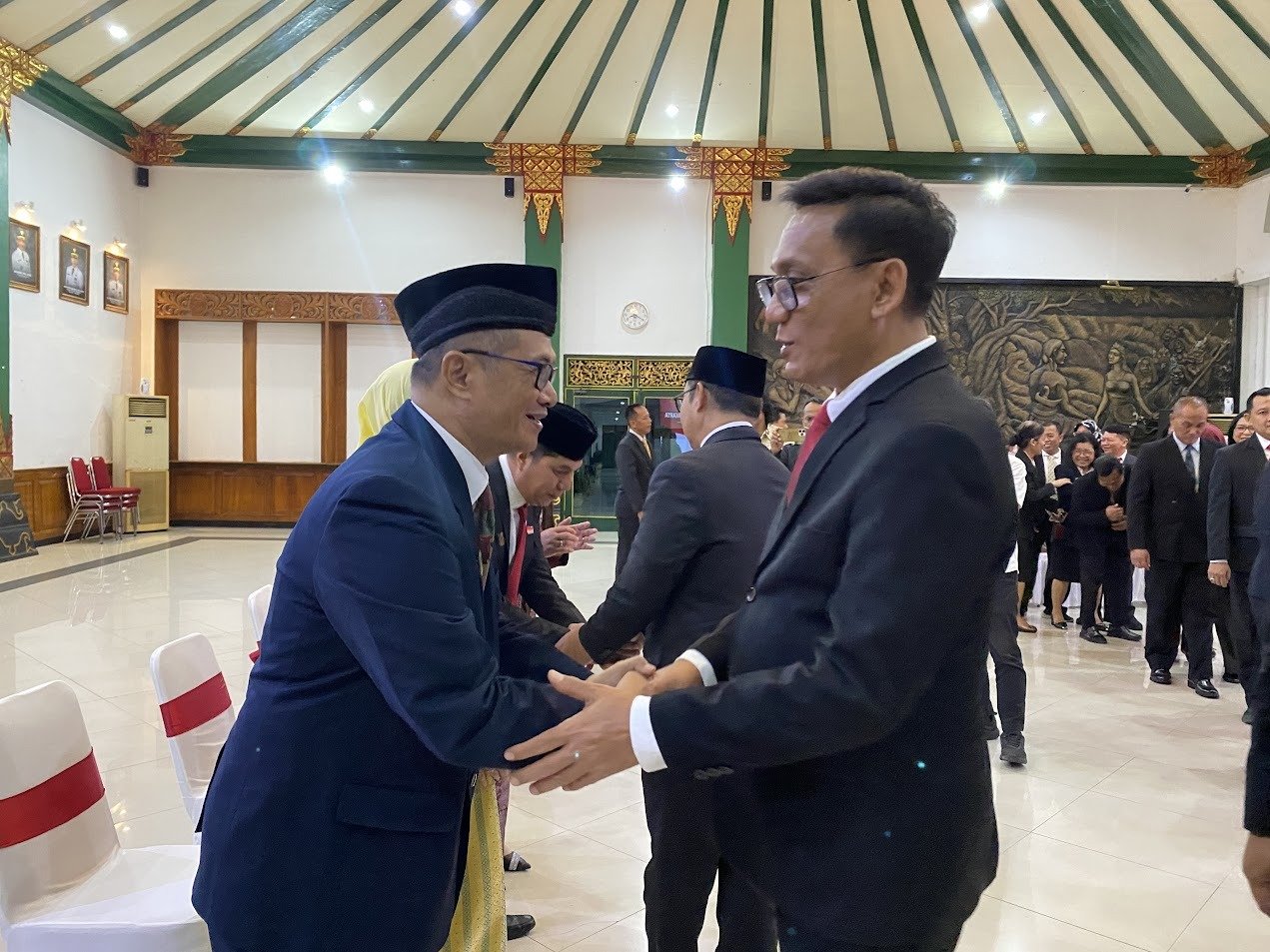
H. KRA. Waryono Adiningrat combines public-sector experience and private-sector involvement while promoting professional competence, innovation and global collaboration.
YOGYAKARTA, INDONESIA — Professional credibility in an increasingly interconnected economy is no longer defined solely by institutional position. It is also shaped by competence, the ability to collaborate across sectors and the capacity to respond to professional standards that extend beyond local environments.
That perspective is reflected in the professional journey of H. KRA. Waryono Adiningrat, SIP, S.Kep, M.Kes, CHt, CHLQM, who combines experience in public service with involvement in private-sector development and human capital initiatives.
Waryono currently serves as a Staff Expert to the Mayor of Yogyakarta, focusing on government and public welfare-related responsibilities. At the same time, he serves as Commissioner of PT Prima Medisina Hanacaraka and Director of PT Adingrat Global Capital.
His positioning across these sectors is based on a clear distinction between public responsibilities and private business activities. For Waryono, professional opportunities in business should be built through competence, service quality and legitimate cooperation rather than relying on government authority.
Building Credibility Through Competence
In a professional environment increasingly influenced by global standards, competence remains one of the most transferable forms of professional capital.
Waryono emphasizes the importance of strengthening professional capabilities according to the requirements of each field. His perspective is that qualifications should be accompanied by practical competence, a professional mindset and the willingness to continue learning.
This approach is particularly relevant to human capital development in healthcare. PT Prima Medisina Hanacaraka operates Hanacaraka Training Center Indonesia, which is listed by Indonesia’s Ministry of Health as an accredited A healthcare training institution.
The training institution provides a professional-development context in which knowledge and practical competencies can be strengthened according to sector requirements. Publicly documented activities also show cooperation with educational and healthcare institutions in professional training programs.
From an international perspective, competency development of this kind is increasingly important as professional standards become more connected across countries. For industries such as healthcare, professional training can contribute to workforce readiness and service quality.
Separating Public Responsibility from Private Enterprise
Waryono’s cross-sector profile also highlights the importance of maintaining professional boundaries.
Public-sector responsibilities are directed toward public interest, policy implementation and community welfare. Private enterprise, meanwhile, operates within a different framework shaped by customers, partners, organizational objectives and market conditions.
For professionals who participate in both environments, maintaining a clear separation between these functions is essential to preserving credibility.
Waryono’s approach is to develop private-sector activities without depending on his ASN position. This means that business relationships should be established based on professional value, competence and the ability to deliver services that meet the expectations of clients and partners.
Such a principle is particularly relevant to professionals seeking to develop international partnerships. Cross-border cooperation requires confidence that relationships are based on transparent professional value rather than institutional influence.
A Platform for Cross-Sector Collaboration
Waryono’s involvement in human capital development also points toward the potential value of collaboration between government, business and professional institutions.
Healthcare and professional training are examples of sectors where different stakeholders can contribute complementary capabilities.
Government institutions can provide policy direction and public-service priorities. Training institutions can provide competency development. Educational organizations can contribute knowledge and research, while private-sector organizations can provide operational capabilities and partnership networks.
When these capabilities are connected effectively, collaboration can move beyond individual transactions and become a broader professional ecosystem.
For Indonesia, such cooperation can also create opportunities to connect local professional expertise with regional and international networks.
Global Competence Without Losing Local Responsibility
One of Waryono’s strongest messages is directed toward Indonesian civil servants and professionals who are preparing for a more competitive working environment.
“Do not be afraid to innovate, and do not be afraid to succeed with global competence,” he says.
The message reflects an important distinction between global competence and global positioning.
Global competence begins with the ability to meet professional expectations, adapt to new knowledge and understand different working environments. International positioning, however, requires more than competence. It requires credibility, consistent performance, reliable partnerships and a reputation that can withstand scrutiny across different markets.
For professionals seeking international opportunities, these elements are interconnected.
Competence creates capability. Consistent performance creates trust. Professional integrity protects reputation. Collaboration then provides a pathway toward wider opportunities.
The Strategic Value of Human Capital
Human capital development is becoming increasingly important as organizations face technological change, evolving customer expectations and increasingly sophisticated professional standards.
For Waryono, the challenge is not simply to train people, but to encourage them to change their professional mindset.
A professional who understands the demands of his or her field is better positioned to identify opportunities for improvement. The ability to evaluate services, respond to feedback and adapt to changing requirements becomes part of professional sustainability.
This principle applies equally to government and business.
Public institutions need professionals who can innovate in response to community needs. Businesses need professionals who can maintain service quality and develop new opportunities. Training institutions need to ensure that their programs remain relevant to the realities of professional practice.
Reputation as a Long-Term Asset
For professionals operating across sectors, reputation can become one of the most valuable long-term assets.
It cannot be created solely through titles or affiliations. Reputation is strengthened through consistent conduct, competence, quality of service and the ability to deliver on responsibilities.
Waryono’s emphasis on professional separation between public service and business reflects this understanding.
His public role carries responsibility toward society, while his private-sector roles require a different set of professional commitments. Keeping those functions distinct can help establish a clearer professional identity.
At the same time, experience across different sectors can provide broader strategic insight.
Government experience can provide an understanding of public needs and institutional processes. Private-sector experience can strengthen perspectives on customer expectations, organizational development and business partnerships.
The combination can become valuable when the knowledge gained in each environment is applied responsibly within its respective context.
Opportunities for International Cooperation
Indonesia’s growing economic connections with ASEAN and other international markets create opportunities for professionals and organizations capable of developing credible partnerships.
In this environment, human capital development can serve as a foundation for cross-border cooperation.
Training partnerships, professional exchanges, institutional collaboration and knowledge-sharing programs can connect Indonesian capabilities with wider regional networks.
For Waryono, the principle remains centered on competence and mutual benefit. An ecosystem should provide value not only to one organization but also to customers, partners and professional communities.
Such an approach can provide a more sustainable foundation for international cooperation than relationships based solely on short-term commercial interests.
Looking Beyond Institutional Titles
Waryono’s professional journey ultimately reflects a broader idea about modern leadership.
Institutional positions may provide authority and responsibility, but long-term credibility depends on what an individual contributes through those positions.
For public service, this means responding to complex welfare challenges and supporting programs that serve communities. For business, it means developing services, partnerships and organizational capabilities. For human capital development, it means helping professionals become more competent and adaptable.
The common denominator is responsibility.
As Indonesia continues to integrate more deeply into regional and global economic networks, professionals will increasingly be expected to combine local understanding with international awareness.
Waryono’s message to ASN professionals captures this direction: innovation should not be feared, and global competence should not be treated as something beyond reach.
For professionals prepared to develop their capabilities, maintain clear ethical and professional boundaries and build relationships based on value, global collaboration can become an extension of professional growth rather than a departure from local responsibility.